Australia Employer-Sponsored Visa 482 to 186: How Temporary Skilled Workers Can Explore a Permanent Residency Pathway
Discover how Subclass 482 visa holders can transition to Australian permanent residency through the Subclass 186 visa. Understand eligibility, employer sponsorship, work experience and key requirements.

Australia has become a popular destination for skilled professionals looking for international career opportunities and long-term settlement options. With demand for qualified workers across different industries, employer-sponsored visas provide an important opportunity for overseas professionals to work and build their careers in Australia.
For many temporary skilled workers, obtaining a subclass 482 visa is only the beginning of their Australian journey. After gaining professional experience and establishing themselves in the Australian workforce, many start considering permanent residency.
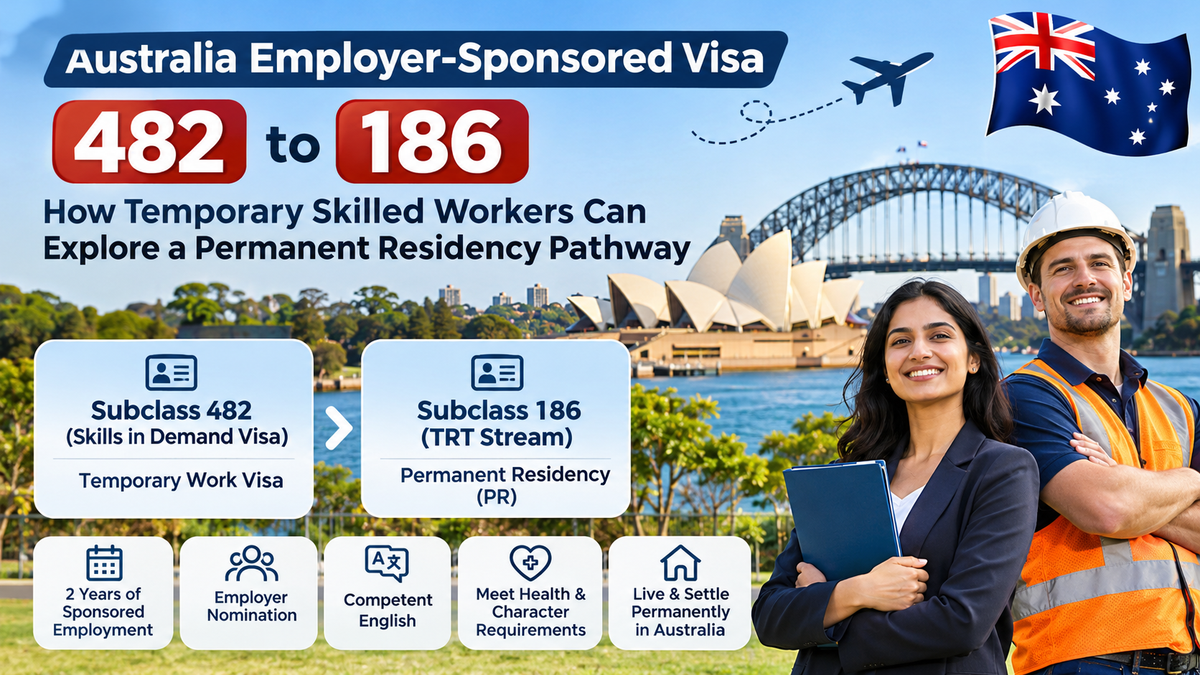
The Employer Nomination Scheme (subclass 186) visa offers an opportunity for eligible temporary sponsored workers to move towards permanent residency through the Temporary Residence Transition (TRT) stream.
Understanding the eligibility criteria, employment requirements, employer nomination process and application procedure is essential before making this transition. This guide explains how temporary skilled workers can explore the Australia 482 to 186 permanent residency pathway in 2026.
Understanding the Australia Subclass 482 and Subclass 186 Visas
The Skills in Demand visa (subclass 482), previously known as the Temporary Skill Shortage visa, allows Australian employers to sponsor qualified overseas professionals when they cannot find suitably skilled Australian workers for certain positions.
Depending on the stream and circumstances, this visa generally allows skilled professionals to work in Australia for up to four years.
The subclass 186 Employer Nomination Scheme visa is a permanent employer-sponsored visa. It allows eligible skilled workers to live, work and study in Australia indefinitely.
For temporary sponsored employees, the Temporary Residence Transition stream provides a potential route from temporary employment to permanent residency.
Unlike the Direct Entry stream, the TRT stream is specifically designed for eligible workers who have gained qualifying sponsored employment experience in Australia.
How to Transition from 482 Visa to 186 Permanent Residency
Understanding how to transition from 482 visa to 186 permanent residency is important for skilled workers who want to continue their careers in Australia while securing a more permanent future.
The transition generally involves the following steps.
Step 1: Hold an Eligible Subclass 482 Visa
Applicants must hold an eligible subclass 482 visa as the primary visa holder or meet the applicable bridging visa provisions. The relevant visa history and employment conditions must be checked before applying.
Step 2: Complete Two Years of Eligible Sponsored Employment
Applicants generally need at least two years of full-time eligible sponsored employment in Australia within the three years immediately before submitting their subclass 186 application.
The employment must satisfy the applicable occupation and visa requirements.
Step 3: Obtain Employer Nomination
The Australian employer must be willing to nominate the employee for permanent residency. The employer must demonstrate that the nominated position is genuine and meets the relevant nomination requirements.
Step 4: Prepare the Required Documents
Applicants should collect employment contracts, payslips, tax records, passport details, English-language evidence and other supporting documents.
Step 5: Lodge the Subclass 186 Application
Once the eligibility and nomination requirements are satisfied, applicants can submit their permanent residency application through the appropriate process.
The nomination must meet the relevant approval and validity requirements.
482 to 186 Visa Transition: Key Eligibility Criteria
The 482 to 186 visa transition is not automatic. Temporary visa holders must satisfy the relevant immigration requirements before becoming eligible for permanent residency.
The major eligibility considerations include:
· Employment experience: At least two years of eligible full-time sponsored employment within the three years immediately before applying.
· Employer nomination: A valid nomination from an eligible Australian employer.
· Age requirement: Applicants generally need to be under 45 years of age when applying, unless an exemption or transitional arrangement applies.
· English proficiency: Applicants must demonstrate at least Competent English.
· Health requirements: Applicants and relevant family members must satisfy Australian health standards.
· Character requirements: Applicants must meet the applicable character requirements and provide police certificates when required.
· Skills and qualifications: Applicants must possess the skills and qualifications necessary to perform the nominated occupation.
Meeting these requirements does not guarantee visa approval. Each application is assessed individually by the Department of Home Affairs.
482 Visa to PR Pathway: Building a Long-Term Future in Australia
The 482 visa to PR pathway provides eligible temporary skilled workers with an opportunity to move from employer-sponsored temporary employment to Australian permanent residency.
For professionals who have already established their careers in Australia, this pathway can be an important step towards long-term settlement.
One significant change introduced on 7 December 2024 made the TRT pathway more accessible to eligible sponsored workers.
Previously, employment history was more closely connected to the sponsoring employer. Under the revised arrangements, eligible periods of sponsored employment with different employers can count towards the two-year work experience requirement.
Additionally, qualifying employment in a related occupation or following a promotion may count towards the required employment period, subject to the applicable conditions.
This provides greater flexibility for workers who have changed employers or progressed professionally while holding eligible sponsored visas.
However, applicants should carefully review their employment history, visa conditions and nomination arrangements before making an application.
186 TRT Stream Requirements: What Applicants Need to Know in 2026
Understanding the 186 TRT stream requirements is essential for temporary skilled workers planning to apply for permanent residency.
The Department of Home Affairs assesses several conditions before granting a subclass 186 visa under this stream.
1. Two Years of Eligible Sponsored Employment
Applicants must have completed at least two years of eligible full-time sponsored employment within the three years immediately before applying.
The qualifying employment must meet the relevant requirements, including being undertaken in Australia while holding an eligible subclass 457, subclass 482 or qualifying bridging visa.
2. Employer Nomination
The applicant must receive a nomination from an eligible Australian employer. The nomination must satisfy the applicable requirements, including the genuine position and employment conditions.
The nomination must be approved within six months before the visa application is lodged.
3. Age Requirement
Applicants are generally required to be under 45 years old at the time of application. Certain exemptions apply to eligible academics, researchers, medical practitioners and some high-income workers, subject to specific conditions.
4. Competent English
Applicants must demonstrate Competent English when submitting their application. They should ensure that their English-language evidence meets the applicable validity and test requirements.
5. Health and Character Checks
Applicants and relevant family members must satisfy the health and character requirements. Police clearance certificates and medical examinations may form part of the application process.
Applicants should review the latest Department of Home Affairs requirements because eligibility exemptions and visa conditions can vary depending on individual circumstances.
Documents Required for the Subclass 482 to 186 Visa Application
Documentation plays an important role in demonstrating eligibility for permanent residency.
Applicants should prepare the following documents:
· Valid passport and identity documents.
· Subclass 482 visa grant letter and relevant visa history.
· Employment contracts and appointment letters.
· Payslips covering eligible employment periods.
· Tax records and income statements.
· Employer reference letters explaining job duties and employment dates.
· Leave records, including paid and unpaid leave.
· English-language test results, where applicable.
· Police clearance certificates.
· Educational qualifications and professional registration documents, where relevant.
· Supporting documents from previous sponsoring employers.
Maintaining accurate employment records throughout the temporary visa period can make the permanent residency application process easier and help avoid unnecessary delays.
Can You Change Employers Before Applying for a Subclass 186 Visa?
Changing employers is a common concern among temporary skilled workers who are planning permanent residency.
The good news is that changes introduced in December 2024 allow eligible sponsored employment with different employers to count towards the two-year TRT employment requirement.
For example, a skilled worker who completes one year with an approved sponsor and subsequently changes employers may be able to count qualifying employment with both employers towards the required period.
However, the employment must satisfy the relevant immigration conditions. Applicants should also ensure that their new employer follows the appropriate sponsorship and nomination procedures.
Changing employers without understanding the visa conditions can create complications. Therefore, workers should review their circumstances before making employment decisions.
Benefits of Transitioning from Subclass 482 to Subclass 186
Obtaining a subclass 186 visa can offer several long-term advantages to eligible skilled professionals.
Permanent residency: Successful applicants can live, work and study in Australia indefinitely.
Greater employment flexibility: Permanent residents generally have the freedom to work for different employers without relying on temporary employer sponsorship.
Healthcare access: Eligible permanent residents can enrol in Australia's Medicare system.
Family opportunities: Eligible family members can be included in the application, subject to the relevant requirements.
Citizenship opportunities: Permanent residents may become eligible to apply for Australian citizenship after meeting the applicable residence and other conditions.
These benefits make the employer-sponsored permanent residency pathway an attractive option for skilled professionals planning to settle in Australia.
Common Mistakes to Avoid When Applying for a Subclass 186 Visa
Even applicants who appear eligible can face complications because of incomplete documentation or misunderstandings about immigration requirements.
Some common mistakes include:
· Assuming that completing two years of employment automatically guarantees permanent residency.
· Failing to maintain proper employment and salary records.
· Overlooking the age and English-language requirements.
· Changing employers without checking visa conditions.
· Providing inconsistent employment information.
· Ignoring the employer's nomination obligations.
· Delaying the application without considering visa expiry dates and nomination validity.
Careful preparation and professional immigration guidance can help applicants identify potential issues before submitting their applications.
Conclusion: Plan Your Australian Permanent Residency Journey Early
Moving from a subclass 482 Skills in Demand visa to a subclass 186 Employer Nomination Scheme visa can be an important milestone for skilled professionals who want to establish a permanent future in Australia.
The Temporary Residence Transition stream offers an opportunity for eligible sponsored workers to convert their temporary employment experience into a permanent residency application.
However, successful applications require more than simply completing the required employment period. Employer nomination, age, English proficiency, health, character and other eligibility conditions must also be satisfied.
Temporary skilled workers should start planning their permanent residency journey early, maintain accurate employment records and understand the applicable immigration requirements.
With proper preparation and an understanding of the latest Australian immigration policies, eligible workers can take informed steps towards achieving their long-term settlement goals.
If you need assistance with an Australian employer-sponsored visa or permanent residency (PR), please feel free to contact us through the [contact form]. Our team will be happy to guide you through the visa application process and provide professional support every step of the way.
Disclaimer: This article is intended for general informational purposes only and does not constitute legal or immigration advice. Australian immigration policies and eligibility requirements may change. Applicants should consult the Department of Home Affairs or a registered migration agent for advice regarding their individual circumstances.